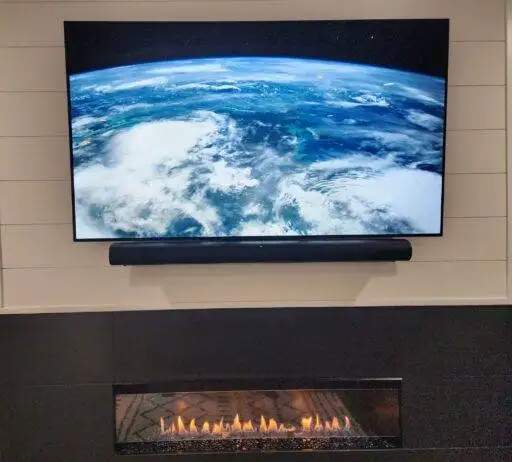
Best TV Wall Mounts | Builder’s Picks

Best tv wall mounts builder picks south charlotte services
Best TV Wall Mounts | Builder Picks by South Charlotte Services

Best TV Wall Mounts Charlotte NC โ€” A Retired Builder’s Field-Tested Picks

South Charlotte Services has mounted TVs on drywall, brick, stone, and stucco across Ballantyne, Matthews, and every neighborhood in between since 2007, and these are the exact mounts John Clay reaches for on the job โ€” not a spec-sheet comparison, but what actually holds up on a real Charlotte wall. Call (704) 442-7019 or visit southcharlotteservices.org if you’d rather skip the research and have it installed right the first time.

350+ five-star Google reviews ยท Lifetime No-Fall Warranty on Workmanship on every install we do
Why This List Is Different From the Others

Most “best TV mount” roundups are written by people comparing spec sheets, not people who’ve actually drilled into a Charlotte wall. John Clay spent over 30 years as a residential builder before founding South Charlotte Services in 2007, and in that time he’s mounted TVs in homes built in every decade from the 1970s to today โ€” each with different stud spacing, different wall materials, and different problems. These are the six mounts that consistently install clean, hold their weight rating without sagging, and don’t come back as a warranty call.

How John Evaluates a Mount Before Recommending It

Every mount on this list clears the same bar John uses on the job: hardware rated to hold at least 4 times the TV’s actual weight, a wall plate substantial enough not to flex once the TV is extended on the arm, and stud or masonry compatibility that matches what’s actually behind Charlotte drywall โ€” which, in a lot of the older Myers Park and Dilworth-adjacent homes SCS services, is not always spaced the way a brand-new build assumes. Not sure what height to mount at or what screen size fits your wall? Our TV mounting height calculator and TV screen size calculator answer both before you even pick a mount.

Best Tilt Mount for 55″โ€“85″ TVs โ€” SANUS Preferred SLT4-B1

This is John’s go-to when a customer wants a downward tilt to cut glare but doesn’t need full motion. The 9 inches of lateral shift is the real selling point for Charlotte installs โ€” a lot of homes here have studs that don’t line up where you’d expect, especially around a fireplace, and that lateral play means SCS can center the TV over the mantel without extra patch work. Rated to 150 lbs and UL-listed. Works on TVs from 42″ up to 90″.

Best Full Motion Mount for Open-Concept Rooms

For the open-concept kitchen-to-living-room layouts common in newer Ballantyne and Waxhaw builds, this is the mount John installs most. It swivels far enough to face either room, extends 16.5 inches off the wall for easy port access, and the 1.1-inch slim profile keeps it from looking bulky when the TV is pushed flat. Rated to 132 lbs, fits 43″โ€“90″ TVs. Needs studs or masonry โ€” not drywall alone.

Best for Built-Ins and Deep Media Niches

When a TV is going into a custom niche or built-in cabinet โ€” which SCS builds and mounts into regularly on the custom carpentry side of the business โ€” this is the mount with enough reach to matter. It extends 40.1 inches, which is enough to pull the TV clear of a deep cubby and angle it toward the seating, then retracts back to 3.7 inches when you’re done. Rated to 150 lbs, works on 8″, 12″, 16″, or 24″ stud spacing.

Best for True Corner Installs

For a TV genuinely going into a room corner rather than a flat wall, this is the mount John reaches for. The separating wall plates are built to fit angled corner walls specifically, with 180ยฐ swivel and +5ยฐ/-15ยฐ tilt so the screen can actually face into the room instead of sitting flat against the angle. Rated to 99 lbs and tested to 3 times that capacity โ€” comfortable headroom for most 32″โ€“60″ TVs in a corner, but check your TV’s actual weight before assuming fit if you’re pushing toward 70″. Fits 32″โ€“70″ TVs, VESA up to 600x400mm.

Best Flush, Low-Profile Look

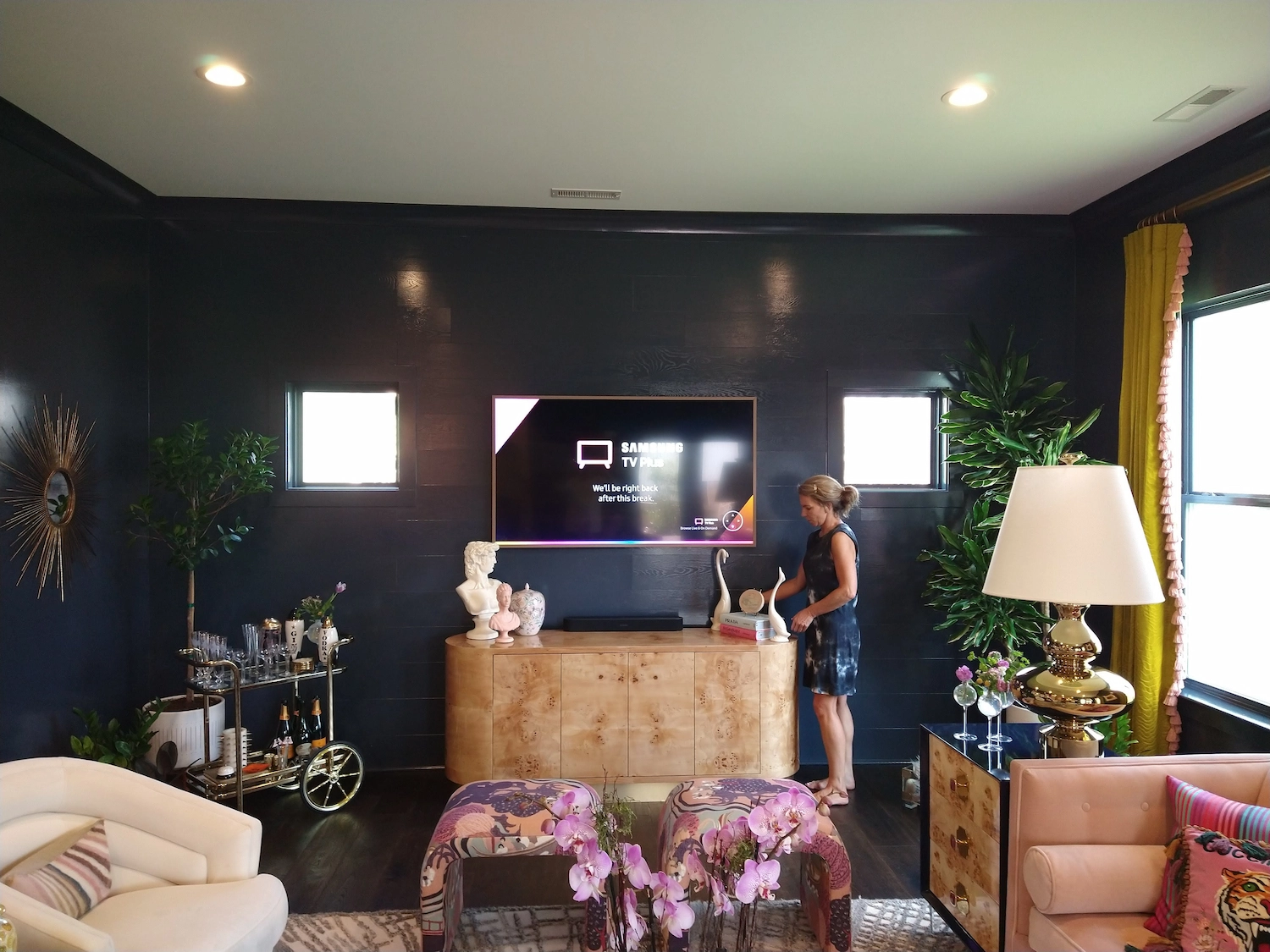
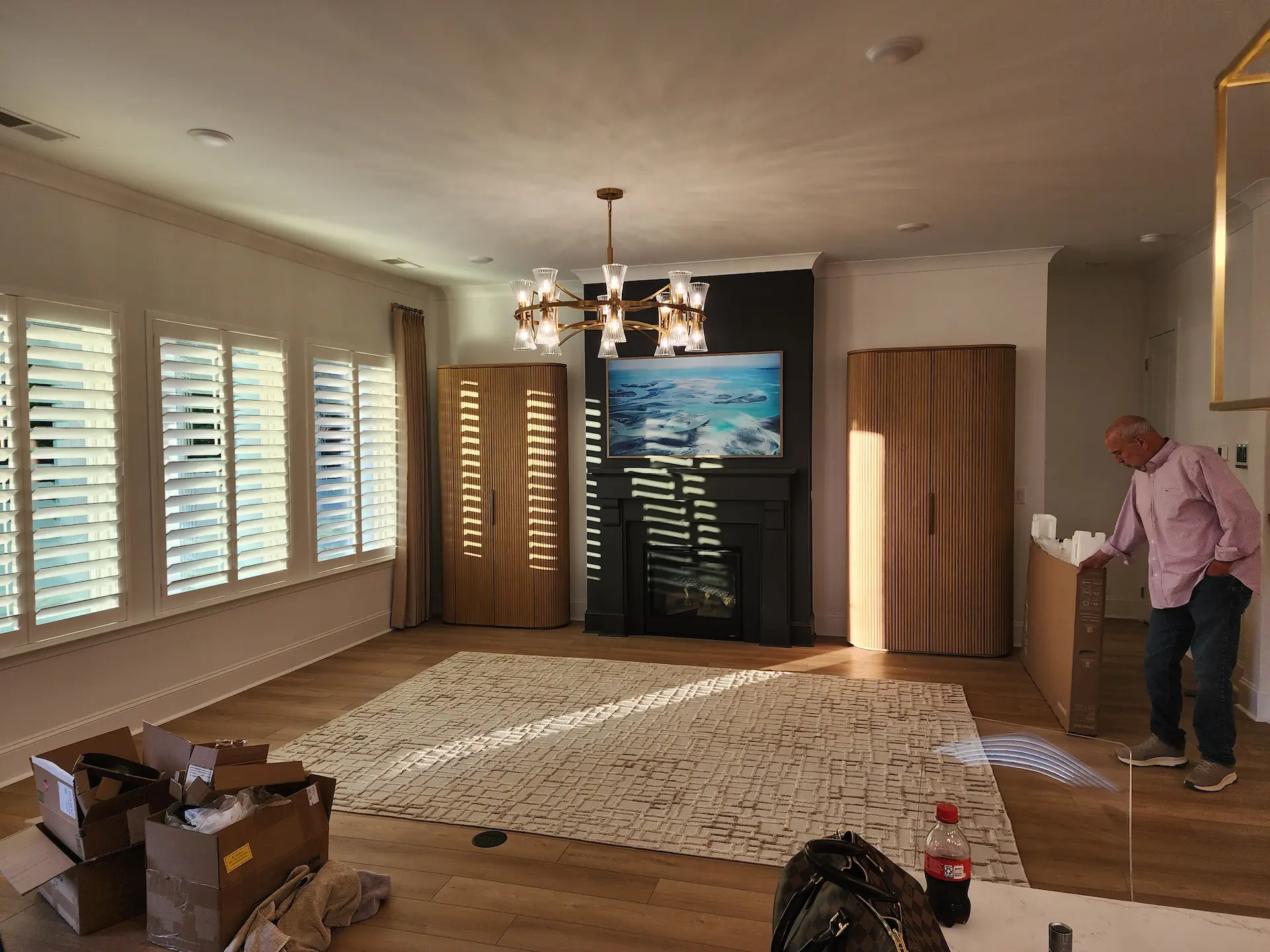
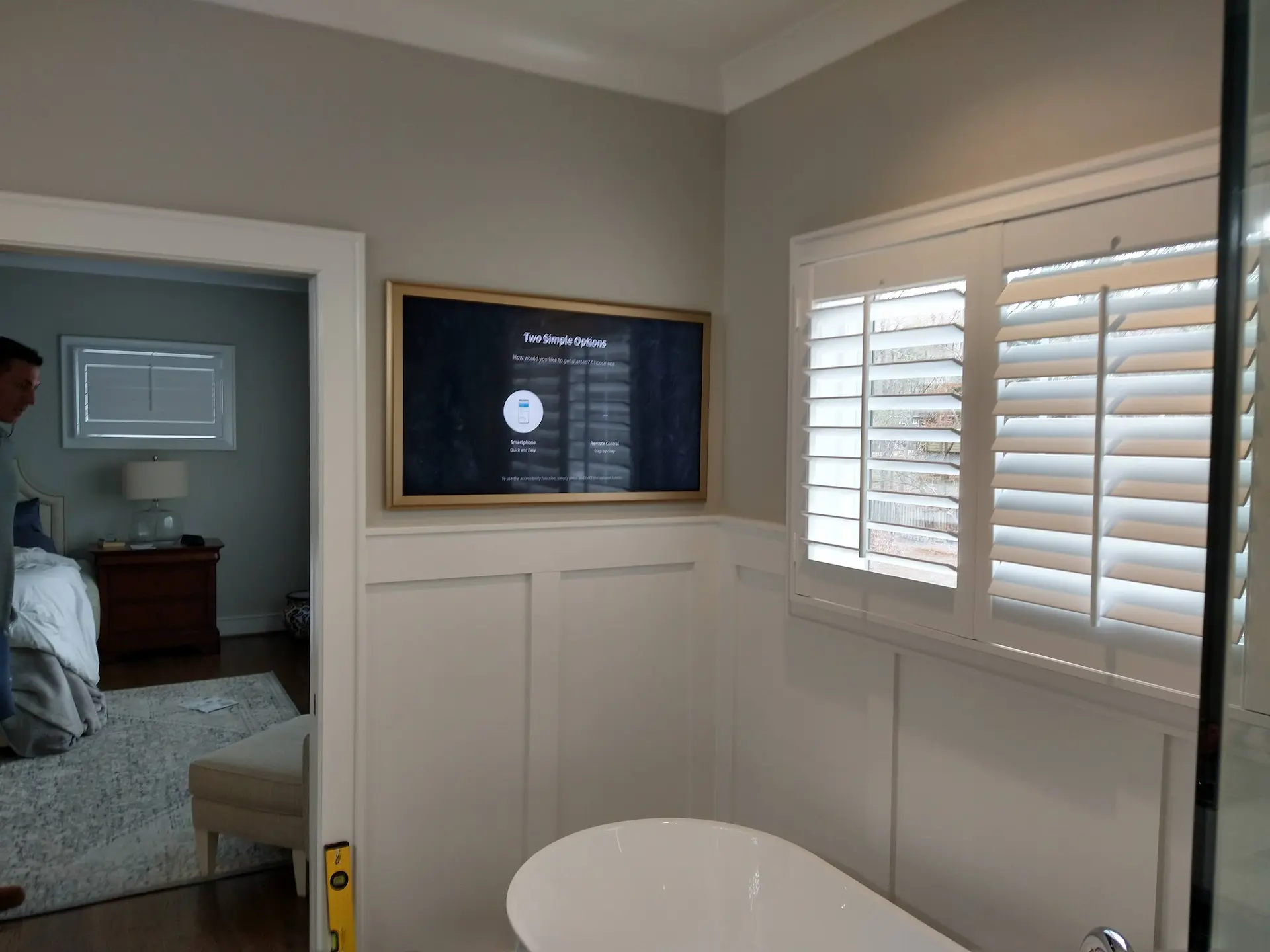
For customers who want the TV sitting nearly flat against the wall โ€” a look SCS sees requested constantly alongside Samsung Frame TV installs โ€” this low-profile mount holds the screen just 1.1 inches off the wall while still supporting up to 165 lbs. The directional arrow on the wall plate is a small detail that saves real install time; it’s an easy mount to get backwards otherwise. Fits 37″โ€“86″ TVs, works on 16″, 18″, or 24″ stud spacing or solid masonry.

Best for Fireplace Mantel Installs

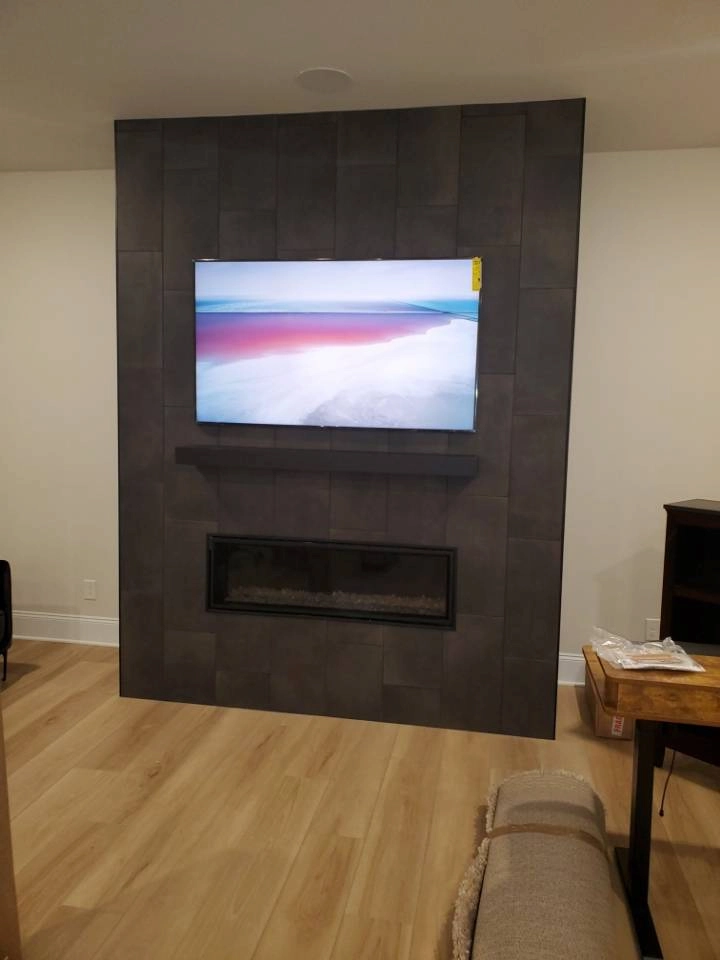
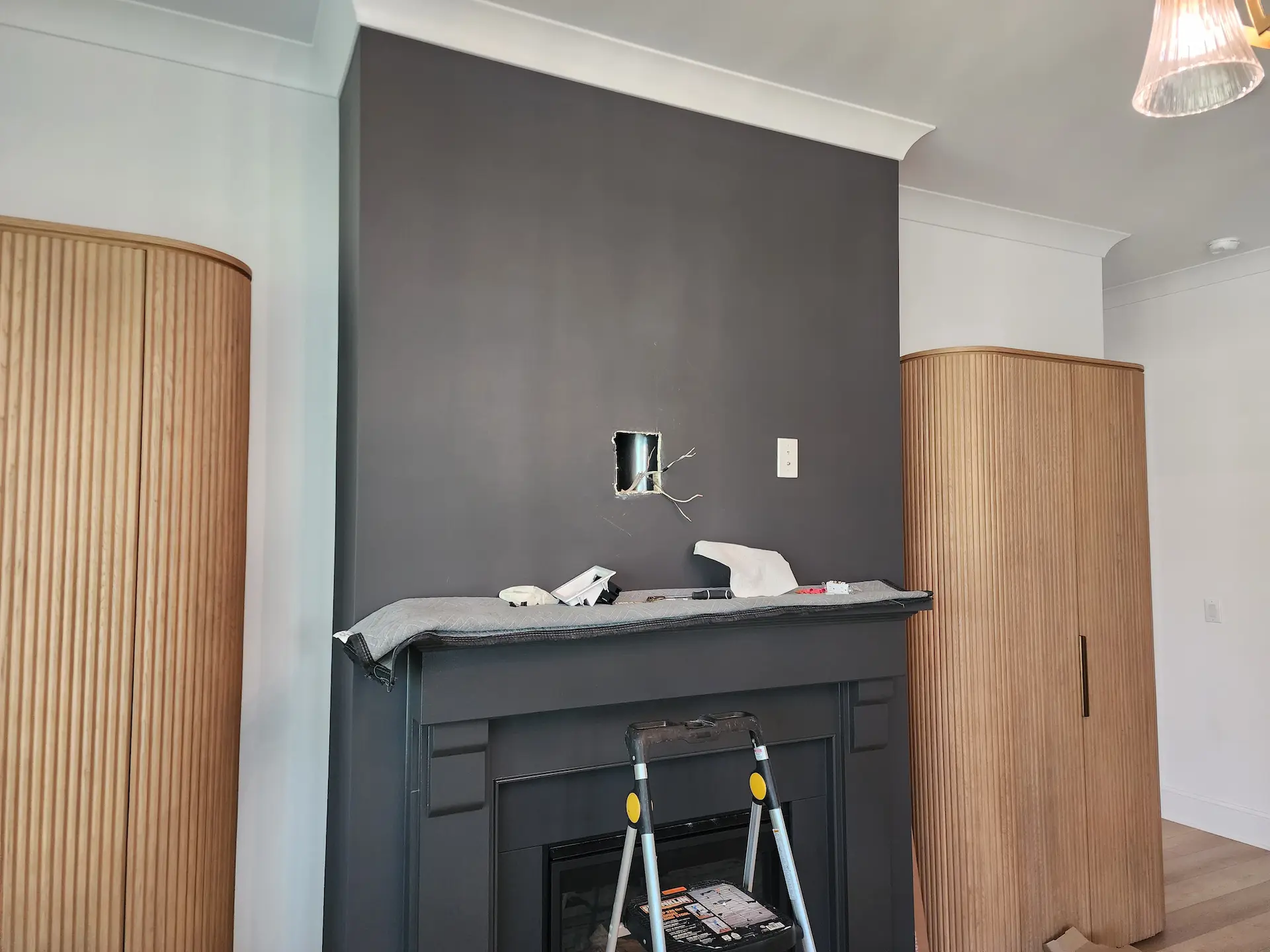
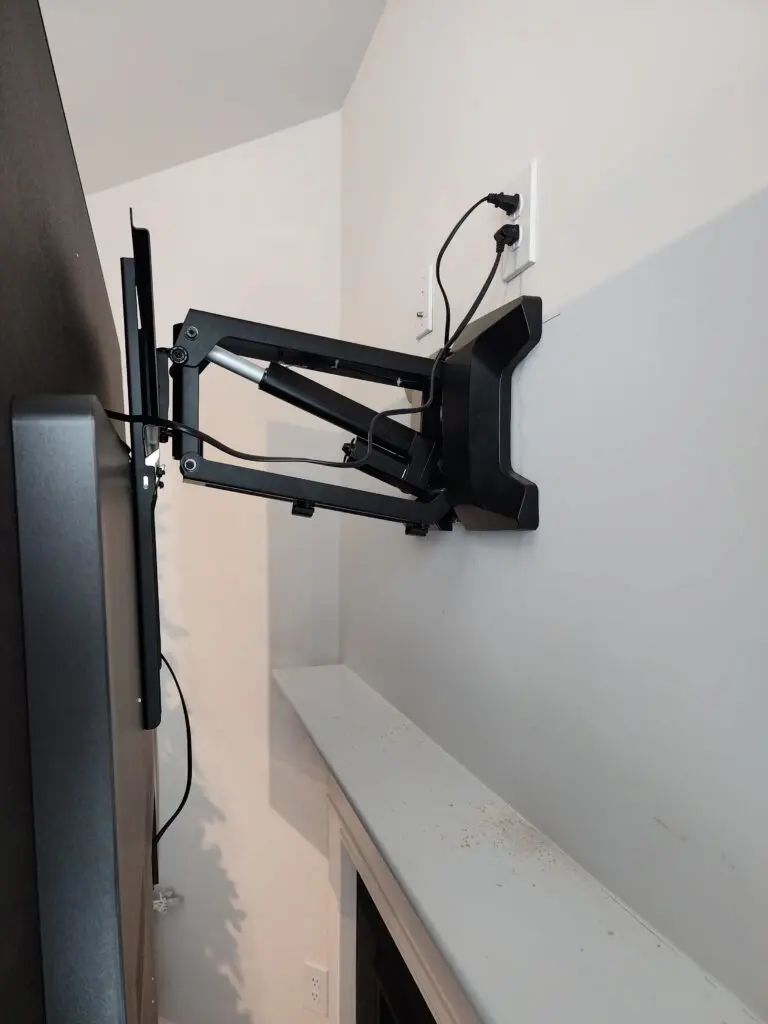
South Charlotte Services mounts more TVs above fireplaces than any other single job type, and for customers who want the screen to tilt down for viewing and return to a raised, art-like position afterward, this motorized mantel mount is the one John recommends. It holds a programmable remote position memory, tilts, swivels, and rotates on command, and supports TVs up to 77 lbs. Built for masonry, brick, or wood stud mounting above a mantel specifically.

Quick Reference โ€” Which Mount Fits Your Situation

Your SituationJohn’s RecommendationMax Weight
Fixed wall, want a downward tiltSANUS Preferred SLT4-B1150 lbs
Open-concept room, need it to swivelFull Motion 43″โ€“90″132 lbs
Built-in cabinet or deep nicheExtended Full Motion150 lbs
TV genuinely mounting in a cornerCorner TV Wall Mount99 lbs
Want the flush, near-flat lookLow-Profile Mount165 lbs
Above a fireplace mantelMotorized Mantel Mount77 lbs

What to Watch Out For

The mounts that come back as warranty calls almost always share one of three problems: hardware rated for less than 4 times the TV’s actual weight, factory lag bolts too short for the wall type they’re going into, or a full-motion arm installed on a single stud when the TV and extension distance called for two. None of that shows up on the Amazon listing โ€” it shows up six months later when the arm starts to sag.

John’s Pre-Install Checklist

  • Confirm actual stud spacing behind the wall โ€” never assume 16″ on-center in Charlotte homes built before the 2000s
  • Match wall material to the mount’s rated hardware โ€” drywall alone is never sufficient for a full-motion arm on a large TV
  • Verify the mount’s weight rating is at least 4x the TV’s actual weight, not just “compatible”
  • Check VESA pattern against the TV before ordering, not after
  • Upgrade lag bolt length for anything 65″ and larger โ€” factory hardware is often the minimum, not the right size for the job

Want It Installed Instead of DIY?

If you’ve already picked a mount above โ€” or you’d rather South Charlotte Services supply and install the right one for your wall and TV โ€” every install includes a Lifetime No-Fall Warranty on Workmanship, starting at $70. See the full TV mounting services page for pricing by size and wall type, or call (704) 442-7019.

Frequently Asked Questions

What size wall mount do I need for an 85 inch TV?

An 85-inch TV needs a mount rated for at least 150 lbs with a wide, dual-stud wall plate โ€” single-stud mounts are not built for this size. The SANUS Preferred SLT4-B1 and the low-profile mount on this list both cover 85-inch TVs safely, but the wall behind the mount matters just as much as the mount itself. On drywall, both studs need to be located and used; on brick or stone, proper masonry anchors are required, not the drywall toggle hardware some kits include by default.

What is a VESA pattern and why does it matter?

VESA is the standardized hole pattern on the back of a TV that a mount’s bracket bolts into, measured in millimeters (for example, 400x400mm). Every mount on this list lists a VESA compatibility range. Check your TV’s manual or the label on the back of the set before ordering โ€” a mismatch here is the single most common reason a mount arrives and doesn’t fit.

Can I mount a TV on drywall alone without hitting a stud?

Not for anything above about 32 inches. Several mounts on this list explicitly state they are not rated for drywall-only installation, and that’s not a manufacturer being overly cautious โ€” drywall alone cannot bear the leverage a full-motion arm creates once a large TV is extended off the wall. Every professional install South Charlotte Services performs locates and anchors into real framing or masonry, never drywall alone.

How much does professional TV mounting cost in Charlotte NC?

South Charlotte Services starts TV mounting at $70 for TVs 31 inches and under on drywall, with pricing scaling by screen size, mount type, and wall material. Full pricing is on the TV mounting cost page. Every install includes the Lifetime No-Fall Warranty on Workmanship regardless of size or mount type.

Affiliate disclosure: This post contains Amazon affiliate links. If you buy through them, South Charlotte Services may earn a small commission at no extra cost to you. We only recommend mounts we actually use on real installs โ€” not products we were paid to feature.

Can You Mount a TV in the Bathroom? | Homeowner’s Guide

Can you mount the tv in the bathroom homeowner's guide

Can You Mount a TV in the Bathroom? What Charlotte Homeowners Need to Know

South Charlotte Services has already mounted a TV in a bathroom for a Charlotte homeowner, so this isn’t a hypothetical for us. Call (704) 442-7019 or visit southcharlotteservices.org for a straight answer on whether your bathroom is a good fit. Short version: yes, you can mount a TV in the bathroom, but it depends on your outlet, your ventilation, and how much moisture the room actually sees.

350+ Five-Star Google Reviews ยท 4.9 Rating ยท Lifetime No-Fall Warranty on Workmanship

The Short Answer

Yes, you can mount a TV in the bathroom, but three things have to be true first: the outlet it plugs into has to be GFCI-protected, the TV itself needs real protection from humidity and steam, and the room needs enough ventilation to actually clear that steam instead of letting it sit on the screen. A large primary bathroom with a fan and good airflow is usually a good candidate. A small, steamy powder room with no exhaust fan usually isn’t, and we’ll say so if that’s what you’ve got.

Can you mount a tv in the bathroom? | homeowner's guide
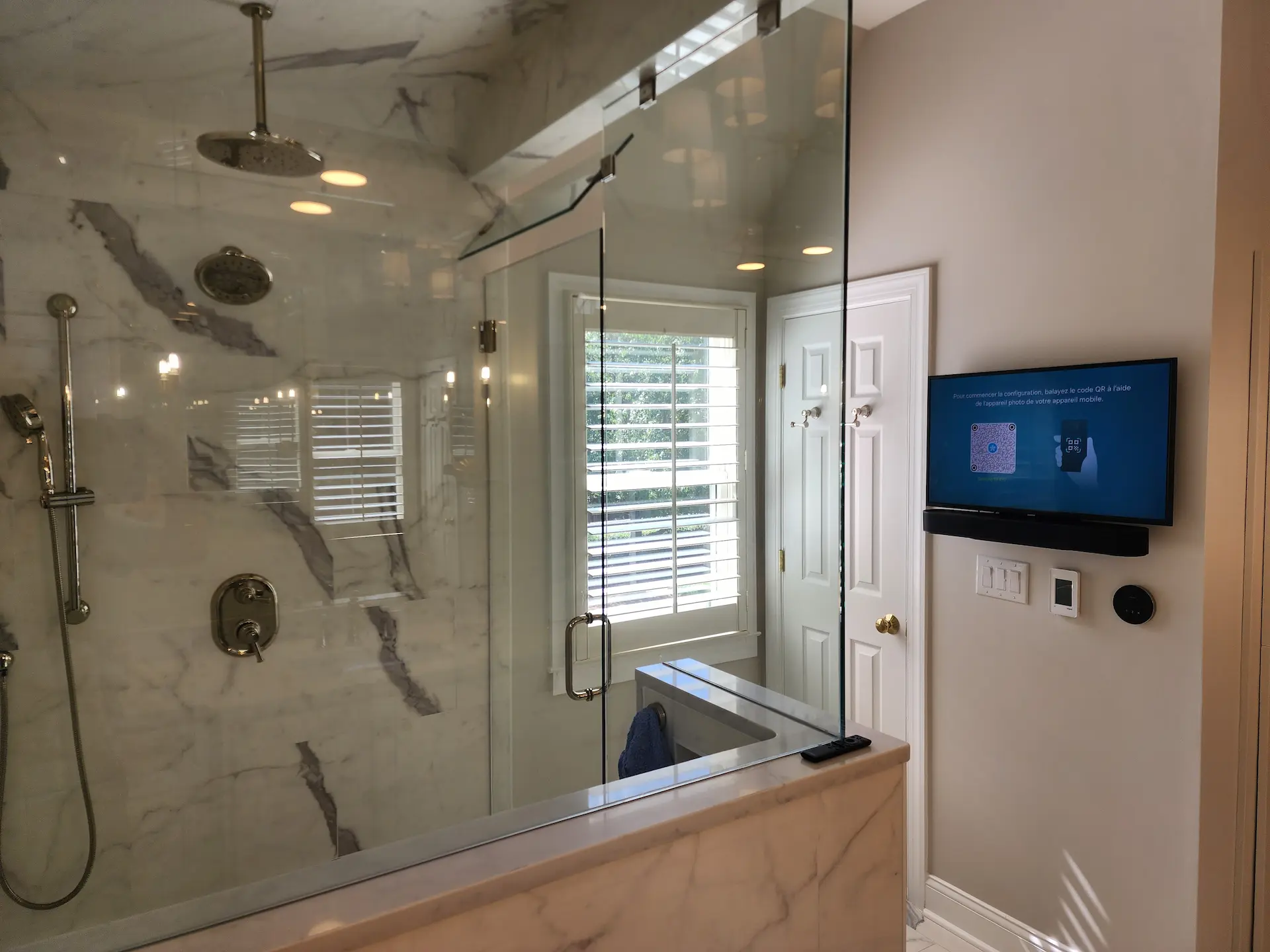
Samsung Frame TV mounted in a Charlotte NC primary bathroom by South Charlotte Services, wired through a concealed One Connect Box.

The Electrical Safety Requirements, Explained Plainly

Under the National Electrical Code, every receptacle in a bathroom has to be GFCI-protected, full stop, whether or not it’s right next to the sink. GFCI stands for ground-fault circuit interrupter: it monitors the current in a circuit and cuts the power in milliseconds if it senses current leaking somewhere it shouldn’t, which is exactly the failure mode that turns a small electrical fault into a shock. Code also requires that receptacle to sit within about 3 feet of the sink basin, and it bans receptacles inside the tub or shower area entirely. Light fixtures within 3 feet of a tub or shower have to be rated for damp or wet locations too.

Here’s where we’re straight with you about scope: South Charlotte Services mounts the TV and can relocate or add an outlet as part of wire concealment, the same work we do behind any wall-mounted TV. What we won’t do is tell you your existing bathroom outlet is code-compliant if we haven’t verified it. If you’re not sure whether your bathroom’s outlet is GFCI-protected, that’s a five-second check, and if it isn’t, that’s a licensed electrician’s job before anything gets mounted, not ours to skip past.

Protecting the TV Itself From Humidity

A standard indoor TV isn’t built for steam. Humidity that gets inside the housing can corrode internal components over months of exposure, well before anything looks visibly wrong. There are two honest ways to handle this: a TV built and rated for humid environments, or a standard TV installed inside a sealed, moisture-resistant enclosure designed for exactly this use. Either way, placement matters as much as the hardware. A TV mounted directly across from a shower catching steam and spray every day is a different situation than one mounted on a wall the shower doesn’t reach, in a room with an exhaust fan that actually clears the air.

Is Your Bathroom Actually a Good Fit?

Good candidates: primary bathrooms with real square footage, a working exhaust fan, and a wall the shower spray doesn’t reach directly. These rooms clear humidity fast enough that a properly protected TV holds up fine over years of normal use.

Harder candidates: small powder rooms or half baths with no ventilation, bathrooms where the only reasonable wall is directly across from an open shower, and steam showers specifically, since sustained steam exposure is a different and harsher environment than routine humidity. We’ll tell you honestly if your bathroom falls into this category rather than mount something that won’t hold up.

Bathroom TV Mounting FAQ

Everything you need to know before you call.

Can you safely mount a TV in a bathroom?

Yes, provided the outlet it plugs into is GFCI-protected, the TV has real protection from humidity, either a purpose-built moisture-resistant TV or a sealed enclosure, and the room has enough ventilation to clear steam. A large primary bathroom with a working exhaust fan is a much better candidate than a small, steamy powder room.

Does a bathroom TV need a special outlet?

It needs a GFCI-protected outlet, which the National Electrical Code already requires for every bathroom receptacle regardless of distance from the sink. If your bathroom’s outlet isn’t GFCI-protected, that’s electrical work for a licensed electrician to handle before a TV goes up, not something to skip.

Will a regular TV get ruined by bathroom humidity?

Eventually, yes. Humidity that gets inside a standard TV’s housing can corrode internal components over months of exposure, often before anything looks visibly wrong. That’s why a bathroom install needs either a TV rated for humid environments or a standard TV inside a sealed, moisture-resistant enclosure, not a standard TV mounted bare.

Where should a TV be placed in a bathroom to avoid moisture damage?

As far from direct shower spray and steam as the room allows, ideally on a wall the shower doesn’t face directly. Placement combined with ventilation matters as much as the TV’s own moisture rating.

How do you prevent rust or corrosion on a bathroom TV wall mount?

The mount hardware matters as much as the TV itself in a humid room. We use corrosion-resistant mounting hardware and stainless fasteners on bathroom installs specifically because standard zinc-plated hardware can start showing surface rust within a year of regular steam exposure. Combined with proper placement away from direct shower spray and a room that actually ventilates, corrosion-resistant hardware is what keeps the mount itself from becoming the weak point in an otherwise well-protected setup.

What’s the best way to protect a TV from bathroom humidity if I don’t want a dedicated waterproof model?

A sealed, moisture-resistant enclosure is the honest alternative to buying a purpose-built waterproof TV. It lets you mount a standard TV, including a Samsung Frame TV, behind a sealed housing that keeps steam and moisture away from the internal components, while still giving you a normal indoor picture and normal remote function. It costs more upfront than a bare mount, but it protects a TV you may already own instead of forcing a separate humidity-rated purchase.

How do you run the power and HDMI cables safely for a bathroom TV?

The same way we handle wire concealment behind any wall-mounted TV, adapted for a bathroom’s electrical code requirements. That means keeping cable runs clear of the GFCI-protected outlet’s required clearance from the sink and tub, never routing anything through the wet zone directly around the shower, and using in-wall rated cable where it’s run inside the wall. If your bathroom needs a relocated or added outlet to make the wiring work cleanly, that’s priced as part of the same wire concealment service we use on any other TV mount.

Is a Samsung Frame TV a good fit for a bathroom installation?

It can be, and we’ve already done it. A Charlotte customer had a 32-inch Samsung Frame TV mounted with a Sonos Beam soundbar in their primary bathroom, with the One Connect box concealed as part of the install. A Frame TV isn’t inherently more moisture-resistant than any other standard TV, so the same rules apply: GFCI-protected power, real humidity protection, and enough ventilation in the room to clear steam.

How much does it cost to mount a TV in a bathroom in Charlotte?

Pricing follows the same size-based structure as any other TV mount, starting at $70 for 31 inches and under, plus any add-ons for mount type or wall material. If outlet relocation is needed, that’s priced separately as part of wire concealment. Call (704) 442-7019 for a specific quote.

Find South Charlotte Services Reviews & Profiles

Trustindex Reviews ยท Google Reviews ยท Yelp Reviews ยท Houzz Profile ยท Facebook ยท Nextdoor ยท LinkedIn ยท YouTube

350+ five-star Google reviews ยท 4.9 rating ยท southcharlotteservices.org ยท Matthews, NC 28105

Thinking About a Bathroom TV?

Tell us about your bathroom and we’ll tell you honestly whether it’s a good candidate, no upsell if it isn’t. Lifetime No-Fall Warranty on Workmanship on every mount.
Nail Pops vs Structural Cracks | Charlotte Drywall Repair Guide

Nail Pops vs Structural Cracks: What Actually Needs a Charlotte Drywall Repair Call

South Charlotte Services gets this call every week: a homeowner finds a crack or bump in their wall and needs to know, honestly, whether it’s nail pops vs structural cracks Charlotte homes deal with as routine wear, or something bigger. Call (704) 442-7019 or visit southcharlotteservices.org for a straight answer. Joe Woods and Yuri Kalyuzhnaya, South Charlotte Services’ Drywall Repair specialists, have assessed hundreds of Charlotte-area walls between them, and most of what looks alarming turns out to be ordinary house-settling wear, not a structural problem.

325+ Five-Star Google Reviews ยท 4.9 Rating ยท Lifetime No-Fall Warranty on Workmanship

The Real Difference Between a Nail Pop and a Structural Crack

A nail pop happens when the wood framing behind your drywall shrinks slightly as it dries out, which lets the drywall fastener push forward just enough to show through the paint as a small round bump, dimple, or hairline crack. It is almost always cosmetic, and it is one of the most common repair calls South Charlotte Services gets, especially in homes under two years old where the framing lumber is still losing moisture, and again seasonally in older homes as humidity swings through the year.

A structural crack is a different animal. It tends to run diagonally, often at roughly 45 degrees from the corner of a door or window, and it is usually wider than an eighth of an inch. Structural cracks often show up alongside other signs: a door that suddenly sticks, a floor that feels slightly uneven, or a crack that keeps coming back within weeks of being patched. One of these signs alone is rarely a crisis. Several of them together, on the same wall, is worth a real assessment before anyone reaches for the joint compound.

Drywall repair charlotte nc | texture-matched patching by trusted professionals
Before
Nail pops vs structural cracks: how to tell them apart, why charlotte's clay soil matters, and when to call. Lifetime no-fall warranty on workmanship.
After

Nail Pop or Structural Crack? Side by Side

What You SeeNail PopStructural Crack
ShapeSmall round bump or dimple, usually in a straight line where fasteners were drivenDiagonal, often from a door or window corner
WidthHairlineWider than 1/8 inch, sometimes visibly growing
CauseWood framing drying out and shrinking, loosening the fastenerFoundation or framing movement, often tied to soil conditions
CompanyAlone, no other symptomsSticking doors, uneven floors, cracks that recur after patching
FixRe-set or replace the fastener, patch, sand, paintNeeds a real assessment before any cosmetic repair

Why Charlotte Homes See More of This Than Most

Charlotte and the surrounding Piedmont sit on expansive red clay soil, and that geology drives most of the wall cracking South Charlotte Services sees that isn’t simple nail pops. Clay soil expands when it absorbs water and contracts when it dries out, and that cycle runs twice a year here: spring rains saturate and swell the soil, then July and August dry spells pull it back the other way. A wall that cracked in late summer and a wall that cracked in April can have the same underlying cause moving in opposite directions.

Hurricane season adds a second pattern. Storm remnants that reach Charlotte between June and October can drop several inches of rain in a day, saturating soil that then settles unevenly over the following weeks. If a crack shows up a month after a heavy storm system passed through, that timing is a real clue, not a coincidence.

One Thing That Looks Worse Than It Is: Truss Uplift

If the gap you’re seeing is a thin crack right where an interior wall meets the ceiling, especially in a home with a trussed roof, it may be truss uplift rather than settlement. Roof trusses expand and contract slightly with seasonal humidity differences between the attic side and the living-space side, which can pull the top chord up just enough to open a hairline gap above interior partition walls. It looks alarming and it is not the same as a foundation problem. It’s still worth a real look, since the fix (a control joint instead of a rigid patch) is different from either a simple nail pop repair or a structural crack repair.

What South Charlotte Services Does, and What We Don’t

South Charlotte Services repairs the drywall itself: nail pops, settlement cracks, water stains once the leak behind them is fixed, and cosmetic damage from an old patch job that was never done right. If a crack turns out to be caused by an active roof or plumbing leak, we’ll tell you that plainly so the source gets fixed first; patching over an active leak just means patching it again in six months. If the pattern points to genuine foundation movement, that’s a structural engineer’s call, not ours, and we’ll tell you that too instead of taking a job outside our lane.

Nail Pops vs Structural Cracks FAQ

Everything you need to know before you call.

How can I tell nail pops vs structural cracks apart myself?

Nail pops are small, circular bumps or hairline cracks caused by wood shrinkage or a loosening drywall fastener, and they’re cosmetic. Structural cracks are usually wider than an eighth of an inch, run diagonally from a door or window corner, and often come back after patching. When you’re weighing nail pops vs structural cracks Charlotte homes see most, the presence of other symptoms, like a sticking door or an uneven floor, is the real tell.

Why do drywall screws or nails pop out in the first place?

Wood framing has moisture in it when a house is built, and as that lumber dries over the first year or two, it shrinks slightly. That tiny shrinkage is enough to push a fastener head forward through the joint compound and paint, creating the bump homeowners call a nail pop. It can also recur seasonally in older homes as humidity swings through the year.

Is a diagonal crack near a door frame always serious?

Not always, but it’s the pattern worth taking seriously. A diagonal crack running from the corner of a door or window frame, especially if the door has started sticking around the same time, points toward frame or foundation movement rather than simple settling. It’s worth a real assessment rather than a quick patch.

Does Charlotte’s clay soil really cause more wall cracking?

Yes. The Piedmont region’s expansive red clay soil expands when it’s wet and contracts when it dries, and that cycle repeats every year with the seasons. Homes across the Charlotte metro deal with this regardless of age or price point, which is why local assessment experience matters more here than in regions without expansive clay.

How much does drywall repair cost in Charlotte?

South Charlotte Services’ general handyman and repair work, including drywall repair, starts at $100, backed by a Price Match Promise against any written quote from a licensed, insured competitor for the same scope of work. The exact cost depends on the size and cause of the damage, which is why we assess before quoting rather than guessing over the phone.

What if the crack turns out to be structural, not cosmetic?

We’ll tell you plainly. South Charlotte Services repairs drywall, not foundations, so if a crack’s pattern points toward genuine foundation or framing movement, we’ll recommend a structural engineer or foundation specialist rather than patch over a problem that needs a real inspection first.

Find South Charlotte Services Reviews & Profiles

Trustindex Reviews ยท Google Reviews ยท Yelp Reviews ยท Houzz Profile ยท Facebook ยท Nextdoor ยท LinkedIn ยท YouTube

325+ five-star Google reviews ยท 4.9 rating ยท southcharlotteservices.org ยท Matthews, NC 28105

Not Sure Which One You’re Looking At?

Send a photo or have Joe Woods or Yuri Kalyuzhnaya take a real look. Most calls turn out to be a simple nail pop repair, and if it’s not, we’ll tell you honestly. Lifetime No-Fall Warranty on Workmanship on every repair.